

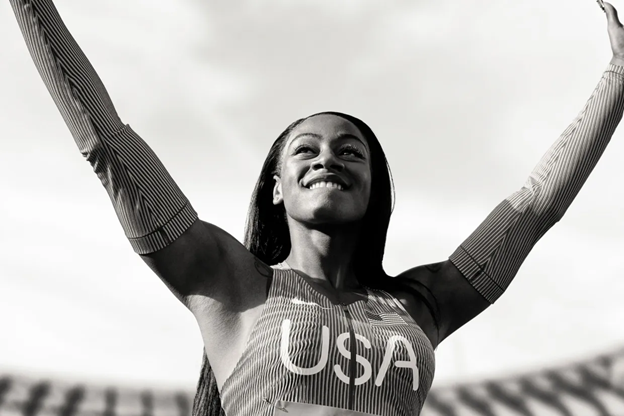
Africa produces some of the most compelling athletic stories on earth. Runners who trained barefoot on highland roads. Boxers who came up through township gyms with no equipment budget and no scouts watching. Rugby players who, in 1995, carried something heavier than a ball onto that field. The material is genuinely extraordinary. The screen output, measured against it, is thin.

This isn’t a straightforward complaint – films about African athletes do exist, and some are good. But the pattern of how they get made, who controls the narrative, and which stories get picked is worth sitting with. Fans who follow both sport and film closely, including those who install hollywoodbets app to track live matches on their phones, already know the gap between watching sport happen and watching a film reconstruct it. The reconstruction, when it comes to African sport, is still mostly done by people from elsewhere.
How Hollywood Has Handled African Sport So Far
The clearest case is Invictus (2009) – Clint Eastwood directing, Morgan Freeman as Mandela, Matt Damon as Springboks captain Francois Pienaar. It covers the 1995 Rugby World Cup, earned Oscar nominations for both leads, and grossed over $122 million worldwide. It’s a good film. It also, fairly consistently, tells the story from the outside in.

Chester Williams was the only Black player on the 1995 Springbok squad. In Invictus he’s a background character. The Black South African experience of that World Cup – and the genuine ambivalence many people felt about cheering for a team that had, for decades, been a symbol of apartheid – gets compressed into a handful of scenes. Mandela’s reasoning is explained. The political complexity is resolved by the final whistle. The story travels well to American cinemas because it’s been shaped to.

That’s not Eastwood being cynical. It’s what happens when a story gets funded internationally. The framing shifts to where the money is. Individual triumph over political backdrop. The nation finds itself through sport. Clean resolution.
What South African Cinema Has Been Doing Instead
Knuckle City (2019), directed by Jahmil X.T. Qubeka, doesn’t do any of that. It follows an aging boxer from Mdantsane – the township known as the boxing capital of South Africa – trying to hold his life together long enough for one last fight. There’s no redemption arc that lands softly. No overseas audience being quietly educated about township life. Just a man in a difficult situation, shot in the place where that situation actually exists. It won multiple South African Film and Television Awards. It didn’t need to explain itself to anyone.
The Queenstown Kings (2023) works similarly – a young soccer player from rural Eastern Cape, a father who used to be a professional and is now a problem, and the kind of story South African sport contains constantly and international productions almost never touch.
Both films deal with poverty and broken structures through sport rather than around them. Local filmmakers don’t have to translate the world they’re depicting. That freedom is visible on screen.
The Films That Exist and What They Cover
The pattern holds pretty consistently across the catalogue:
| Film | Year | Sport | Country of Production | Perspective |
| Invictus | 2009 | Rugby | USA | Western/outsider |
| More Than Just a Game | 2007 | Football | South Africa | Local/insider |
| Knuckle City | 2019 | Boxing | South Africa | Local/insider |
| The Queenstown Kings | 2023 | Soccer | South Africa | Local/insider |
| Down: A Comrades Story | 2023 | Running | South Africa | Local/insider |
| Race | 2016 | Athletics | USA/Germany | Western/outsider |
| Chasing the Sun | 2020 | Rugby | South Africa | Local/insider |
International financing, outsider framing. Local financing, stories that stay where they started.
The Bigger Gap: Stories That Haven’t Been Told At All
Distance runners from Ethiopia and Kenya have dominated world athletics for decades. No major narrative film about any of them. South African cricket’s post-apartheid transformation – who gets to represent the nation, what that representation costs, what it means when it goes wrong – has produced almost nothing in dramatic form. Caster Semenya’s story is one of the most loaded in modern sport. Journalists have written about it extensively. Still no film.
Part of this is money. Narrative sports films are difficult to finance, and international distribution depends on whether a story travels without too much explanation. Stories requiring cultural context tend to lose out to stories that confirm what audiences already expect: the underdog overcomes, the team unifies, the country finds itself. Invictus delivers all three.
Stories about systemic failure, unresolved injustice, or athletes who didn’t win – and there are many – don’t fit that structure. So they don’t get funded. So they don’t get made.
What Changes When Local Filmmakers Lead
Knuckle City and The Queenstown Kings both show something real about what shifts when African filmmakers control the story. Sport gets specific instead of symbolic. The context doesn’t need to be introduced – it’s just there. Athletes are people navigating the conditions of their lives rather than vehicles for a message aimed at someone else’s audience.
You don’t need a film to explain what Mdantsane means to a boxing fan from the Eastern Cape. That knowledge already exists. Local productions build from it. The question is whether the industry starts funding more of them – or whether African sport stays mostly in the background of stories told by and for people who had to fly in to tell them.